Tom Winnifrith, Asterios Koukoudis, and a Turning Point for the Society Farsharotu

A recent Facebook post about Professor Tom Winnifrith and his 1987 book, “The Vlachs: History of a Balkan People” triggered the memory of a turning point in the history of the Society Farsharotu that has not received the attention it deserves.
The Society was founded as a benevolent association by and for members of a large Aromanian clan from the part of the Ottoman Empire that is now Albania – the Farsharotsi, whose name is thought to derive from the town of Frashari. With the rise of nationalism and the disintegration of the Empire in the 1800s, the Farsharotsi faced a choice of which nation to align themselves with. Many if not most chose Romania, a far-off land whose language resembled ours and which had subsidized schools and churches in Aromanian communities throughout the Balkan Peninsula.
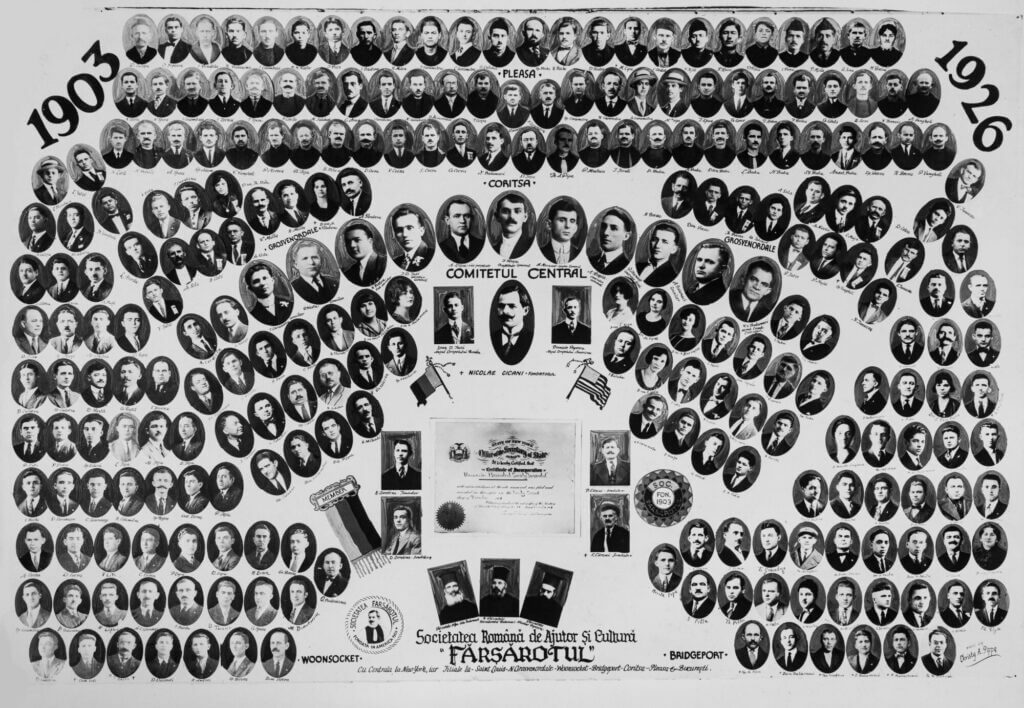
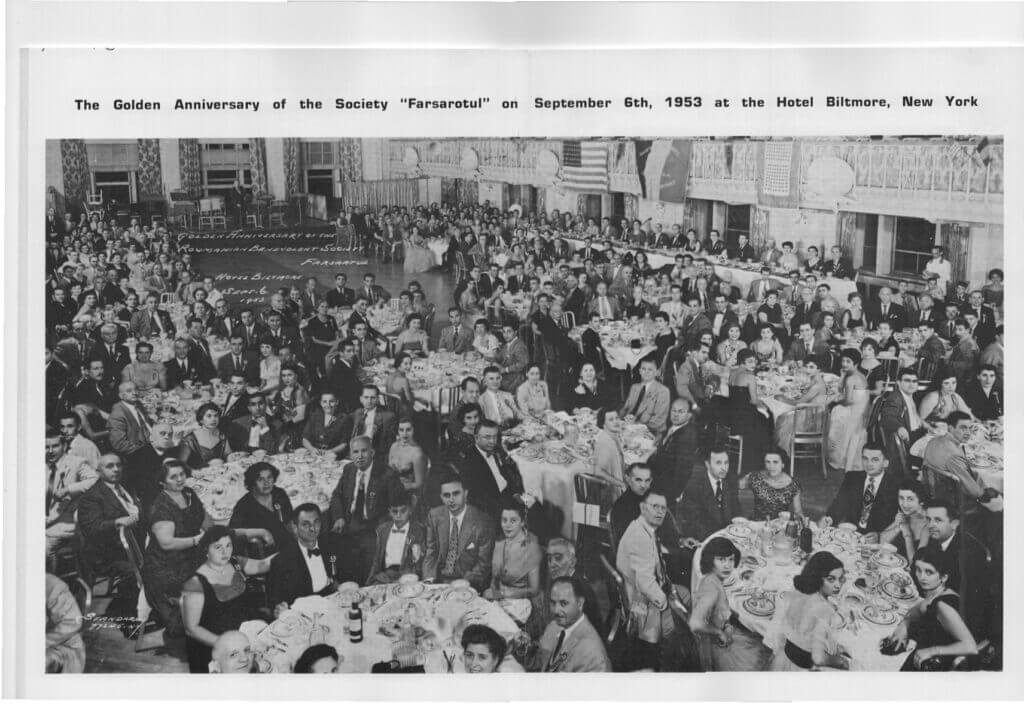
In 1903, a group of pro-Romanian Farsharotsi who had recently migrated to America founded what was soon known as the “Society Farşarotul” under a Romanian banner. During its first 50 years the Society grew almost exponentially as successive generations joined their parents and grandparents as members – the photograph below offers a sense of that growth, as the Society was easily able to fill the Grand Ballroom of New York’s famous Biltmore hotel for its 50th anniversary Ball.
Like all other ethnic groups that came to America in the early 1900s, the language, culture, and national affiliation from the old country continued through the first American-born generation, many of whom fought under the flag of the United States in World War II, some never to return. The second generation, however, was more mobile and educated than its ancestors and began to question the cultural narrative they’d been raised with – that we were Romanians who just happened to have a homeland that was far away from Romania. And those who still had relatives in our homeland of Greece, Albania, and the Yugoslav Republic of Macedonia (now known as North Macedonia) saw a very different picture when they traveled abroad: very few of our people in their original territories defined themselves as Romanian. They called themselves some version of Aroumani and tended to be loyal citizens of whichever nation their region had become part of, just as we in America are loyal citizens here.
By the 1980s, this generational shift became evident in our community in the U.S. It was not a harsh division, it was more of an evolution: While the Society opened its doors to all Aromanians regardless of their national affiliation and began to sponsor films and lectures about our Vlach ethnicity, the old group that identified as Romanian held conferences that tended to feature speakers of like mind.
And then, two significant events happened unexpectedly within the period of a single decade: Two brilliant thinkers in Europe published groundbreaking, definitive new works about the Vlachs that were available in English:
- In 1987, Tom Winnifrith published “The Vlachs: History of a Balkan People” – the first comprehensive English-language study of the Vlachs since Wace & Thompson’s 1914 classic, “The Nomads of the Balkans.”
- And in 1997, Asteris Koukoudis published the first of his masterworks on the Vlachs, “The Vlachs – Metropolis and Diaspora,” which was soon translated into English.
The Society Farsharotu reached out to Prof. Winnifrith shortly after his book was published. We began to offer it through our bookstore, where it repeatedly sold out. And the book had an effect we had not anticipated – for the Society’s members, along with many other Vlachs in America, the book presented a much clearer picture of who we were: ethnic Vlachs/Aromanians by origin, who had become Romanians, Greeks, Albanians, North Macedonians, or Americans by choice, citizenship, or assimilation.
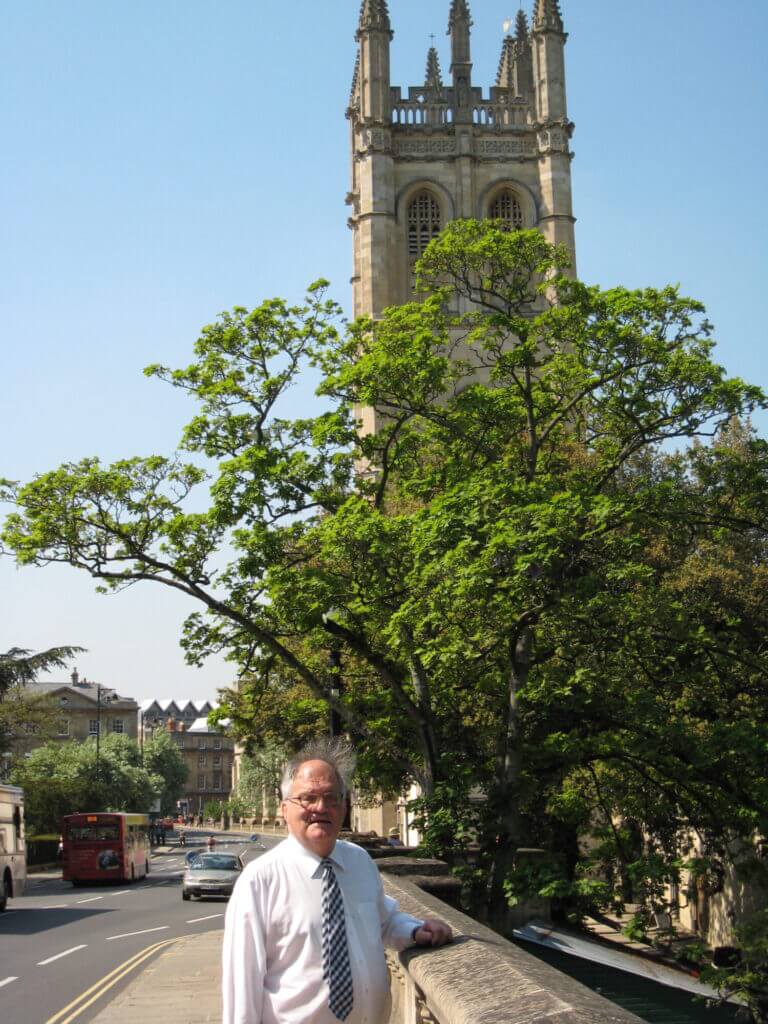
The Society began a long and productive friendship with Prof. Winnifrith, during which he did research on our behalf, including an early analysis of the contents of the Manakia brothers archive in Bitola, which was then in Yugoslavia. He wrote many articles for our Newsletter, offering new information he had gained about the state of our people during his extensive travels in Greece and later in Albania; see, for example, his 1989 article, “Without Anger or Bias.” He became a personal friend of mine as well. With his passing in 2020, we lost a great friend and advocate.
Similarly, as soon as we heard about the Koukoudis book, I wrote to Asteri, beginning a correspondence and friendship that ended when he passed away suddenly and unexpectedly in 2018. The Society Farsharotu was eager to purchase English-language copies of his book for our bookstore and library. Asteri was grateful for our vote of confidence. We also published his work in our Newsletter, including an article drawn from The Vlachs: Metropolis and Diaspora. If you haven’t seen it, I encourage you to read it – it is an intimate, remarkable piece that shows the way many of our compatriots in Greece think about their dual identities as ethnic Vlachs and Greek nationals.
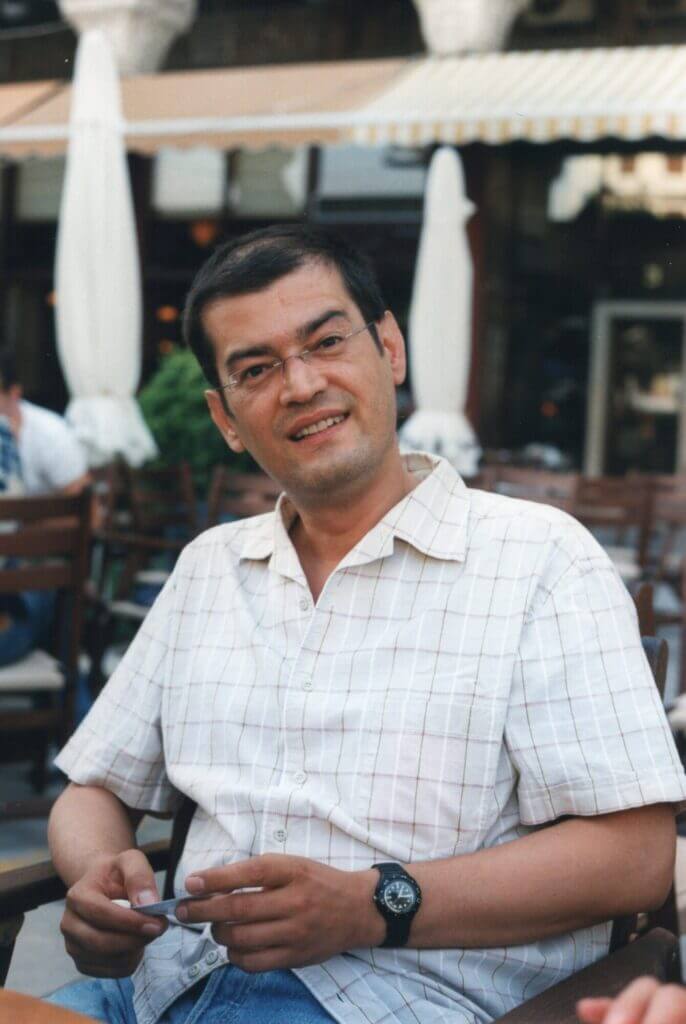
Asteri’s work was unique – he was not a scholar, he was a schoolteacher who loved his Vlach heritage so much that, on his own volition, he took on a task so challenging that even scholars hadn’t attempted it: He described in extraordinary detail the life of the Vlachs in the Balkan Peninsula over the last few centuries – not abstractly, as a scholar might, but on the ground: he had literally walked through many of our villages, talked with their people, and studied the records of their lives during the tumultuous modern era and its wars, economic transformations, and migrations.
To understand the novelty of this approach, it helps to know that Greek scholars of the Vlachs are often preoccupied with an impossible task: trying to prove that the Vlachs of Greece are racially (in the sense of physically, genetically) Greeks who happened to change to a Latin language after the Roman conquest but are now being assimilated back into their original race and language. Until the day that a “Greek gene” is discovered, of course, this can never be proven. (And if you go back far enough, most of the peoples of Europe and the Indian subcontinent are descended from a group of homo sapiens who spoke a language known as Indo-European, the common ancestral language of Greeks and Romans and most others in that part of the world.)
Asteri, by contrast, was not interested in this obsession with racial origins. Instead, he studied the evolving identity, lifestyle, economy, education, and contribution of the Vlachs across the Balkans – what we casually call “real life” – with a special focus on the Vlach community of Greece, which is the largest of all Vlach communities. He was proudly Greek and understood that there was a symbiosis between Vlachs and Greeks – both groups, for example, referred to themselves as “Romans” for most of the last 2,000 years since Rome conquered Macedonia and Greece (Greeks switched their self-designation back to “Hellenes” with the birth of nationalism in Europe in the late 18th century). And the language of the Orthodox church for Greeks and for Vlachs in non-Slavic regions had been Greek through the ages.
The Winnifrith and Koukoudis books challenged old ways of thinking about our Aromanian identity. But the turning point came in 2003, the Society’s 100th anniversary. We arranged a huge, black-tie dinner-dance and invited both Tom Winnifrith and Asterios Koukoudis to come to the US at our expense to help us celebrate this milestone for America’s oldest and largest Vlach association, and they both graciously accepted.
With so many of our people coming to Connecticut for the anniversary, the group that identified as Romanian held one of its periodic conferences. We in the Society saw this as an opportunity to have two leading contemporary experts on the Vlachs present their point of view. I had the closest relationship with both Tom and Asteri, having kept in contact regularly over the years and spent time with them when visiting the U.K. and Greece, so I presented them with our idea about their speaking at the conference and they agreed.
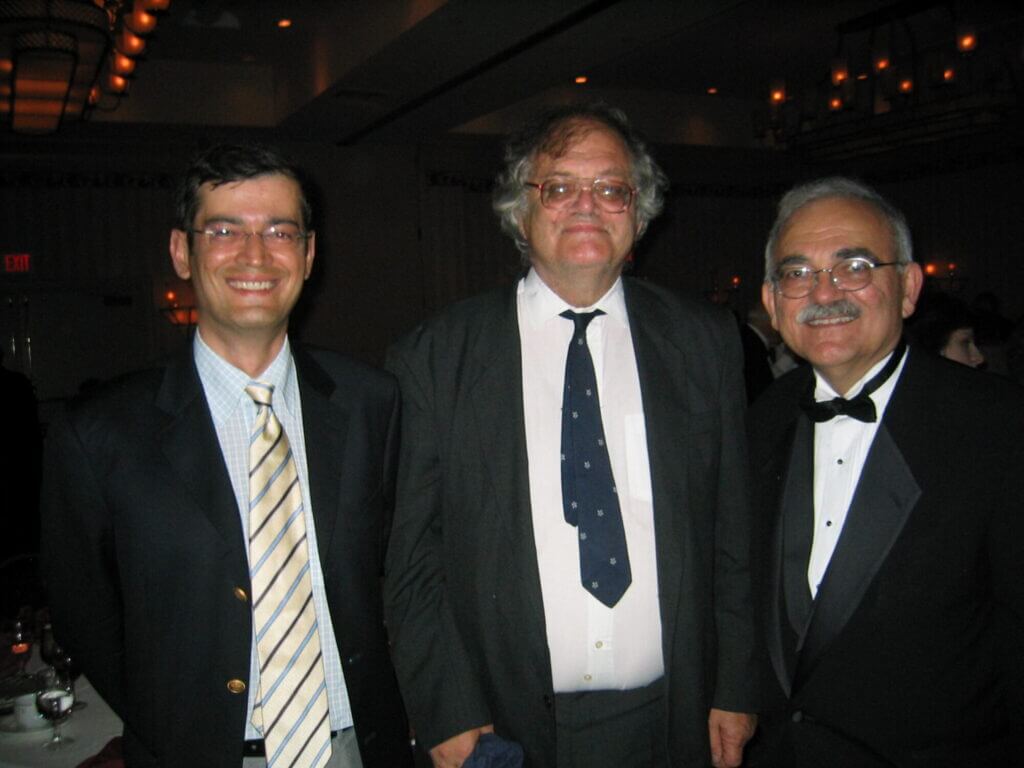
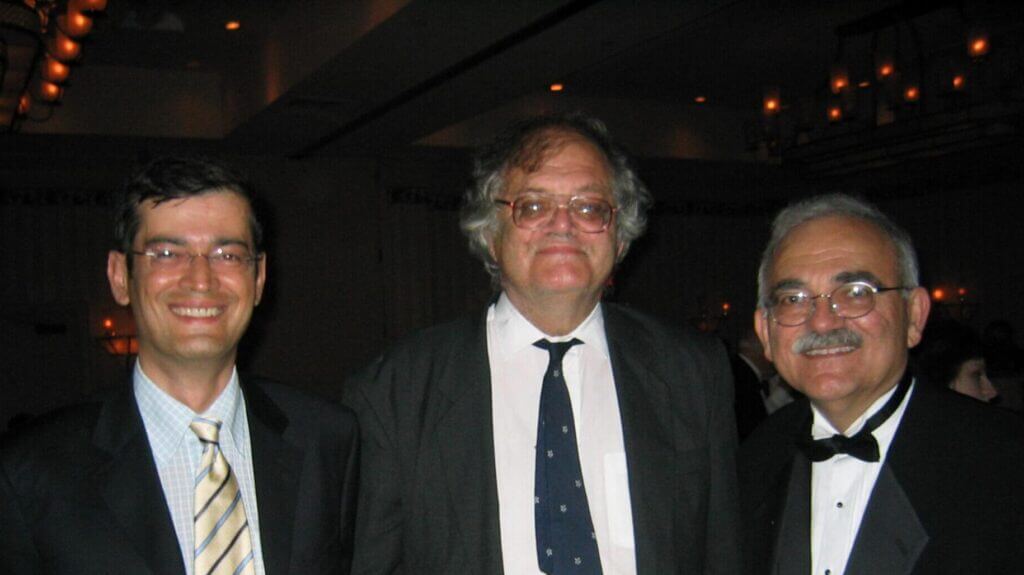
The dinner-dance was a lovely affair, one of our best ever, largely organized by my cousin and fellow Board Member, the late Bill (Vasili) Balamaci, who also acted as Master of Ceremonies. We had American and Balkan music and dancing and we honored past Presidents of the Society; there was great joy and also tearful reunions of people who hadn’t seen each other in many years. Tom and Asteri were welcomed as special guests and were treated like celebrities by our members – and just as we take “selfies” now, many people wanted their picture taken with them.
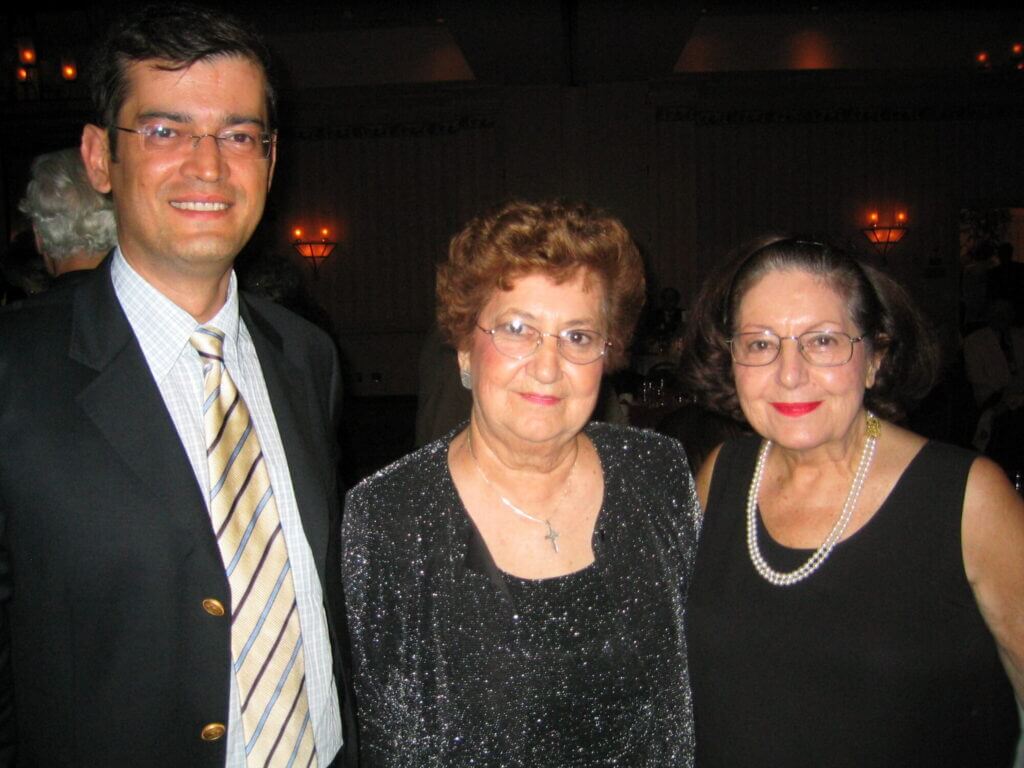
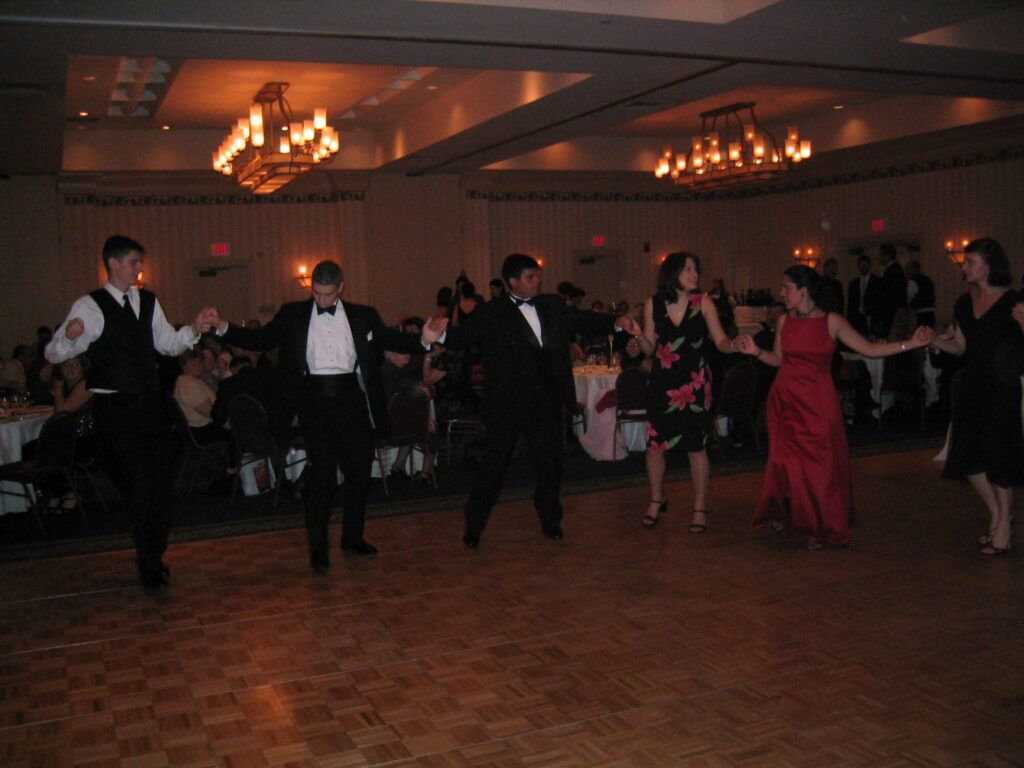
The conference that took place the next day, however, was not as joyous. Tom got up and spoke first – over several decades of research into the Vlachs, he had spoken with many people who had extreme views on both the Greek and Romanian sides, so he was prepared for any challenge this audience might present. As a respected British scholar, he was treated with deference. He presented an overview of his research, was asked questions, a few of which were confrontational, he answered them, and turned the podium over to Asteri.
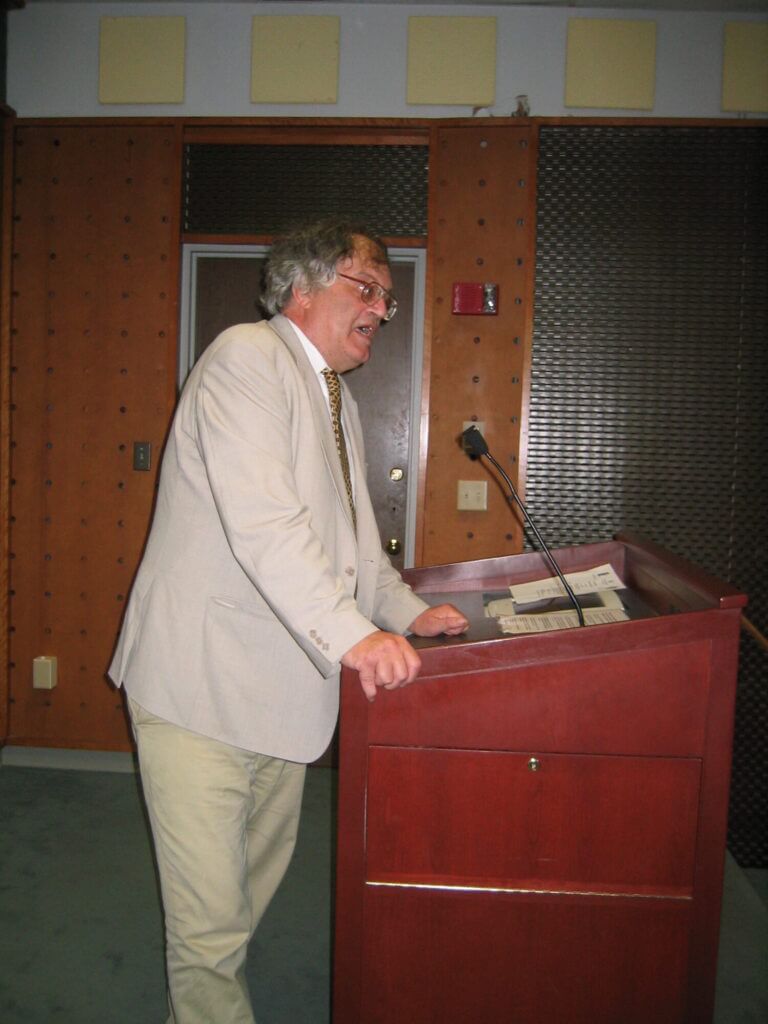
Asteri was a gentle soul, a lovely human being, and polite as can be. His speech, “Contemporary Vlach Identity and Reality in Greece,” was powerful. And indeed, he was interrupted and his views were disputed. But Asteri had an almost encyclopedic knowledge of the actual situation of our people on the ground, to the point where he knew more about our villages and their current state than most of us. His command of these facts gave him an unshakeable certainty as he shared his views and completed his presentation.
We didn’t realize it then, but our Centennial Anniversary was indeed a turning point for the Society. Our membership was excited about the newfound attention our people were receiving, especially the scholarship, hard work, and now the honor of an in-person appearance by Tom and Asteri at our Centennial, and we saw that it was eager to put aside the old hostilities.
And so the Society Farsharotu started our second century on a new note, laying aside the old pro-Romanian versus pro-Greek paradigm for a new paradigm that was simply pro-Aromanian. Today, while our focus is on our community in America, we have positive and productive relationships with sister societies of our compatriots in both Greece and Romania.
The role played by Tom and Asteri in facilitating this shift cannot be overstated. As friends, I miss them both dearly. And as the Society Farsharotu, we owe them a real debt of gratitude.
Responses