Symposium in Vienna on a Standardized Alphabet for Aromanian — October 2025

Following is an unedited Google translation of an article written in Greek by Takis Galaitsis, a philologist and former President and founding member of the Vlach Association of Veria. It was published on November 13, 2025 at https://faretra.info/2025/11/13/diethnes-sinedrio-vlachiki-vlachon-veroias-takis-gkala%CE%90tsis/ and is reproduced here with the kind permission of the author. Several names and other terms may be unfamiliar to Aromanians in America; we have taken the liberty of providing links to further information below, after the end of the article.
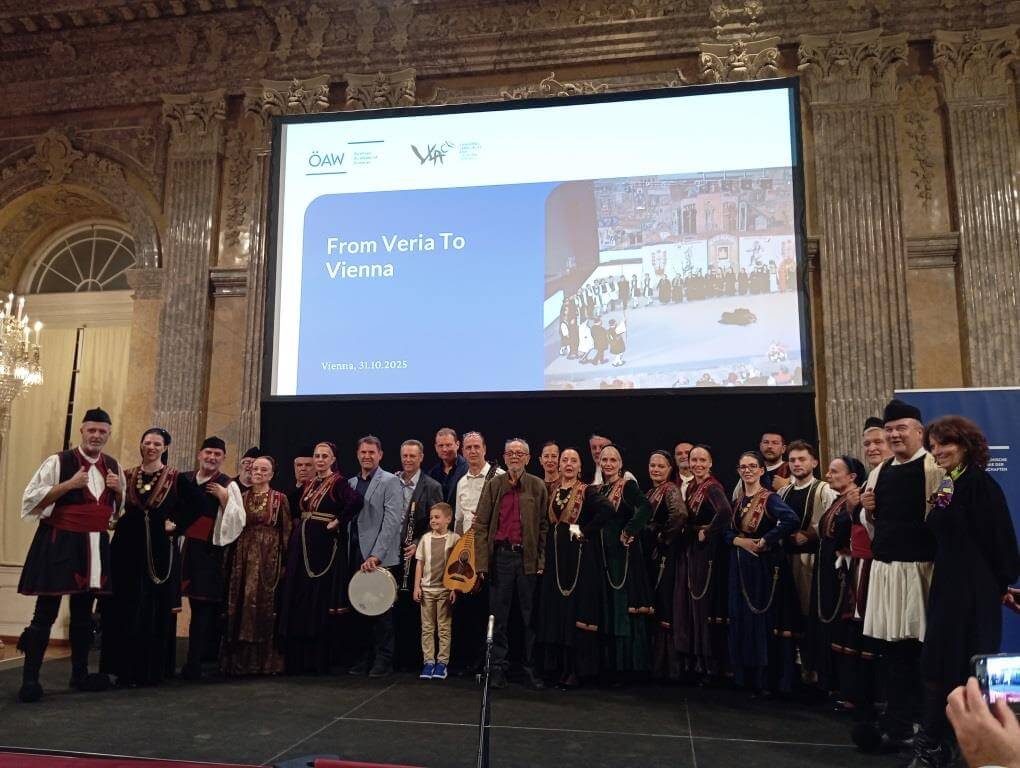
“International Conference on the Vlach Language in Vienna, with the participation of the Vlach Association of Veria” / writes Takis Galaitsis
The Vlach Association of Veria has traveled abroad many times (France, Switzerland, England, Italy, Albania, North Macedonia, Romania) either to attend dance festivals, Greek tradition events, or conferences on the Vlach language and culture.
In Vienna, in one of the cultural capitals of the world, where many Vlachs lived, worked, achieved and excelled, such as Sinas, Doumbas and many others, and where the first Vlach grammar (1813) and the revolutionary texts of the nationalist Rigas were printed in the printing house of the Poulios brothers, Vlachs from Siatista, we had the happiness, on the occasion of the international scientific conference entitled “ Aromanian on the Path to a Literary and Standard Language” , to experience moving moments.
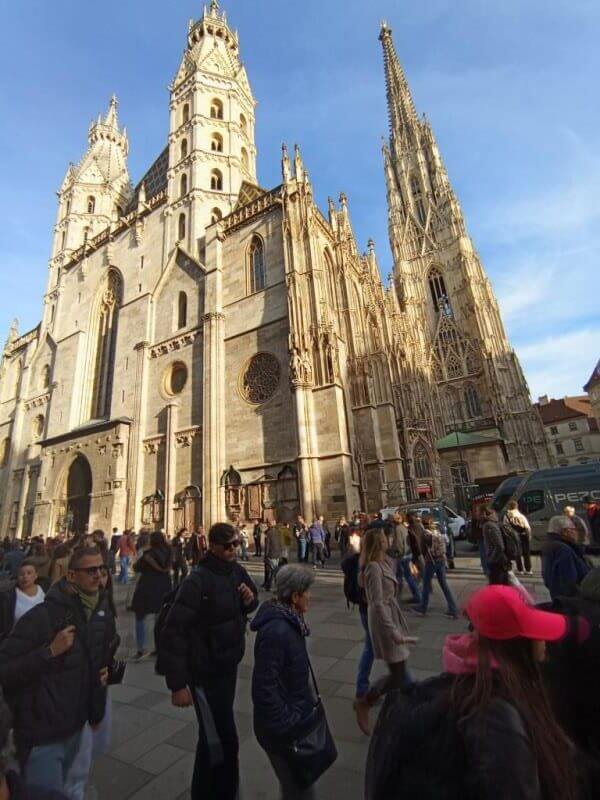
St. Stephen’s Church in Vienna
The Conference in Vienna was different from all the previous ones, because speakers from Universities of all the Balkan countries, Germany, France, London and Canada participated, since the invitation from the organizers for participation was open to the scientific world. Speakers from Greek universities also participated in it, as well as two from the Vlach Association of Veria. Over thirty (30) presentations were made during the two-day event, which concerned the future of Lesser Spoken Languages, and therefore Vlach, in the world of new technologies, the internet, social networks, etc. and Artificial Intelligence. Characteristically, Alexander Demner, grandson of Pericles Papachatzis, Digital Transformation Consultant, who lives in Germany, in his presentation entitled ” Artificial Intelligence Tools and the Aromanian Language ” stated: if the Vlach language does not utilize Artificial Intelligence, in a few decades there will be no speaker of it! In the same spirit was the presentation by Giorgos Kraias, from the Hellenic Open University, with the characteristic title: ” Aromanian in Greece: the last chance” .
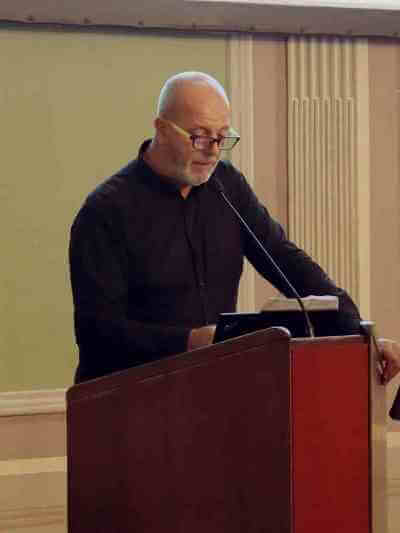
Dimitris Piscos on the podium of the Vienna Conference
From the side of the Vlach Association of Veria, the presentation of the vice-president of the Association, Dimitris Piskos, concerned the ” Digital Repository of Aromanian/Vlach Music” , while Takis Galaitsis presented in detail the ” Actions of the Vlach Association of Veria for the protection and literacy of the Vlach language”. Both proposals were warmly accepted, and in particular the proposal of the Association for the literacy of the language in a simple way, compatible with new technologies and acceptable to the Associations that teach the Vlach language, disconnected from the connotations of the past and the alphabet of the Romanian schools, with which Romania tried, unsuccessfully of course, in the late 19th and early 20th centuries to create a Romanian consciousness among the Vlachs of Greece and the Balkans, was accepted by almost all the participants.
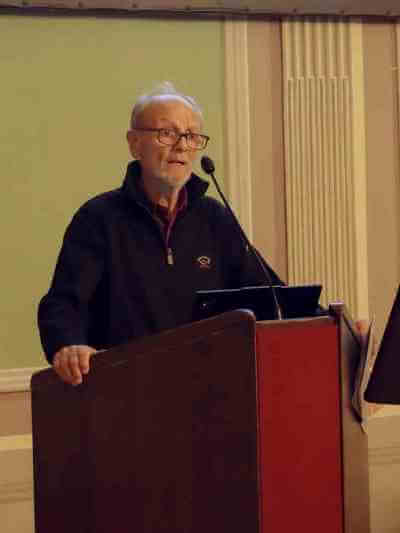
Takis Galaitsis at the Conference in Vienna
All the presentations were strictly scientific, free from nationalism and the instrumentalization of history that characterized previous conferences in the Balkans, which were a result of micro-nationalisms that had emerged in the Balkans after the fall of the regimes in the Eastern and Balkan countries. Research findings were presented by researchers and linguists, as well as presentations by representatives of communities and other cultural associations regarding the dissemination, preservation and revitalization of the Vlach language. High-level discussions were held, and views and ideas were exchanged regarding the historical development of the language, efforts to standardize it and its practical application in teaching, the media and digital tools. The Conference aimed to disseminate knowledge both among scientists through the presentation of studies and research, and between scientists and society through the popularization of scientific findings. When the Conference Proceedings are published, everyone will see the high level of the presentations.
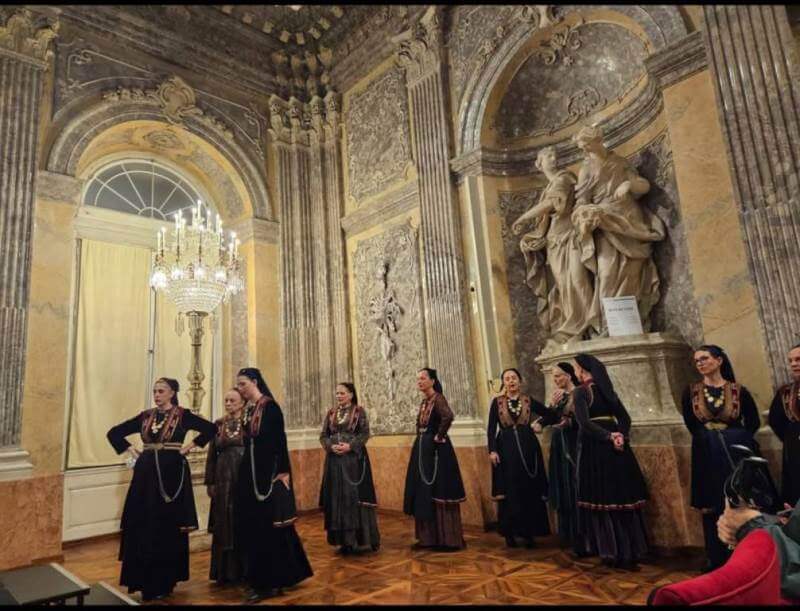
From the dance performance
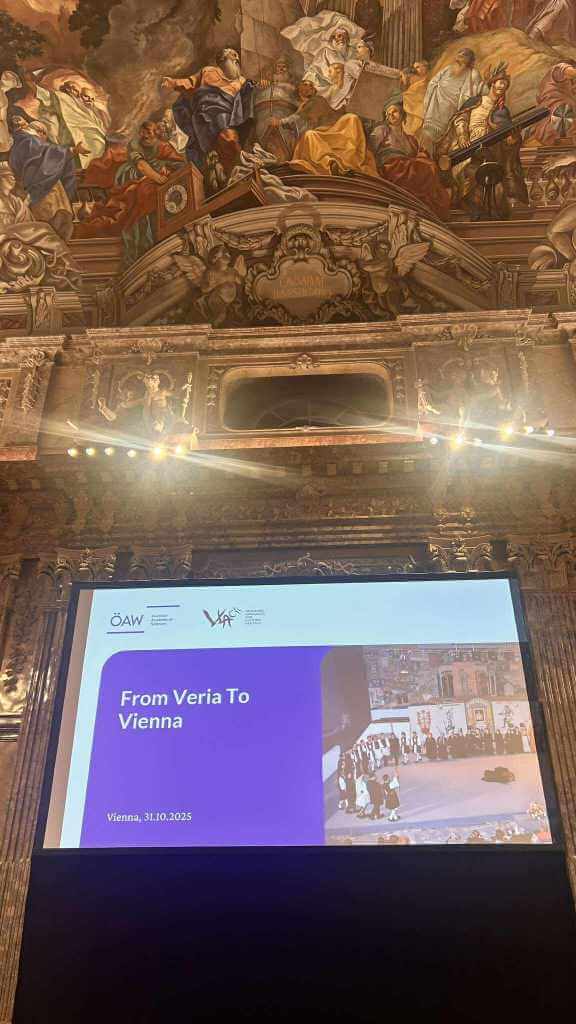
The Conference closed on Friday (31/10/2025) with an unparalleled musical and dance performance by the Vlach Association of Veria. In the highly aesthetic architectural hall of the Vienna Academy of Sciences, in baroque style, with magnificent sculptures and impeccable decoration, three young people from the Vlach Association of Veria, Kostas Melios, Apostolos Karamichos and Tania Piskou performed Vlach songs in the packed hall and demonstrated that there are continuers of the Vlach tradition. This was preceded by a brief but very comprehensive presentation of the Folklore of the Vlachs in Greece by Thede Kahl with a screening of scenes from the Vlach villages of Pindos. Afterwards, the dance group of the mission, in their authentic costumes, presented a rich cultural program with songs from Veria, Pindos and the Grammoustians of Serres and Paikos. The emotion in the hall was pervasive, the enthusiasm indescribable, the experience special. When the program ended, the dancers carried the audience along in a dance extravaganza and the Academy hall was filled with traditional melodies and songs from the company and the voice of Fotis Karaviotis and was reminiscent of dances in the Vlach villages of Greece. What we experienced was shocking. Indescribable!
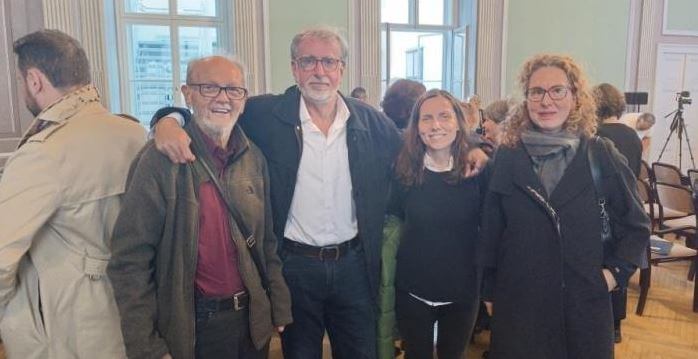
T. Galaitsis, F. Dasoulas, Nadia Dassiou, speakers at the Vienna Conference, and Ms. Papalouka, representative of the Greek embassy in Vienna
The Conference, where Vlachs from all the Balkan countries gathered for the first time to discuss the future of the Vlach language in the new world, was honored with their presence by the Ambassadors of Albania and North Macedonia in Vienna with their wives, a representative of the Romanian Embassy in Vienna, as well as two senior diplomatic officials, representatives of the Embassy of Greece in Vienna, who stayed and enjoyed themselves with the dancers and spectators at the cocktail party that followed in the foyer of the main building of the Austrian Academy of Sciences. Our proposals were sent to the representatives of the Greek embassy, following their kind request, and they responded with the warmest words. The Vlachs, a bridge of friendship in the Balkans, brought Rigas’ vision to life in Vienna, where it first appeared, for cooperation and peaceful coexistence of the peoples of the Balkans, in a spirit of mutual respect, modern and European, free from nationalism and barren confrontations.
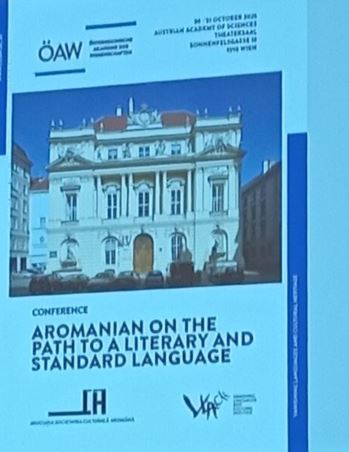
One of the buildings of the Vienna Academy of Sciences, where the Congress was held
The success of the Conference is due, in our opinion, to the fact that it was held under the auspices of the Austrian Academy of Sciences, a scientific institution that has been operating since 1628 (DOMUS UNIVERSITATIS MDC XXVIII is written on the frontispiece of the impressive building of the Academy) and has an enormous prestige throughout the world that does not admit of any doubt about the scientific intentions of the Conferences. Also, to the fact that the initiative for the Conference was taken by Professor Thede Kahl, member of the Austrian Academy of Sciences and head of the Vanishing Languages and Cultural Heritage – VLACH research program of the Academy. Thede Kahl, a connoisseur of over ten languages, is a friend of the Association and was a speaker at an event at the ”Arts Space” for the Vlach Benefactors in Central Europe. He has been a speaker at many conferences in Greece and a guest at many Greek Universities. He works throughout the Balkans and his latest research in Greece concerns the Karamanlidica and Pontica.
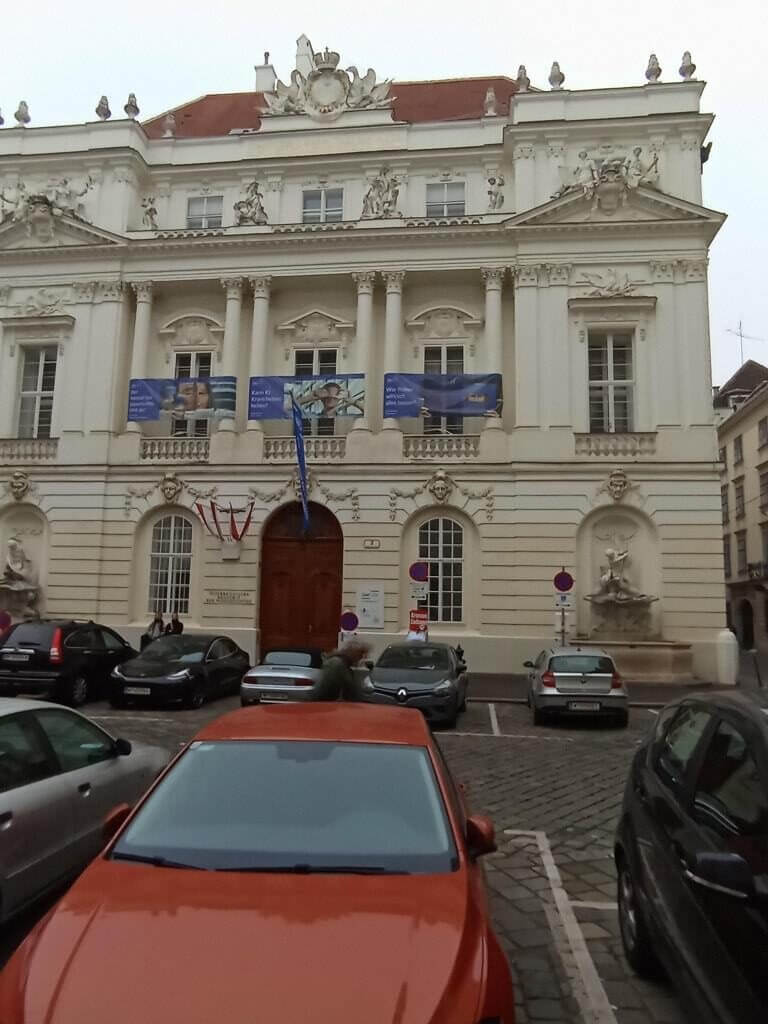
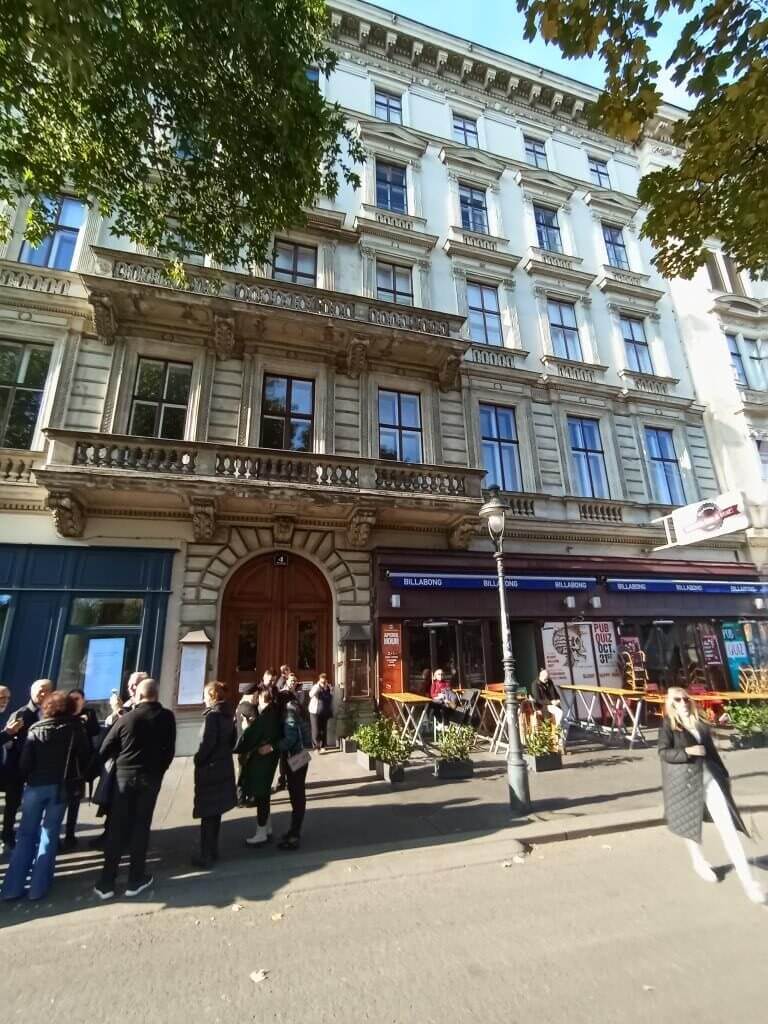
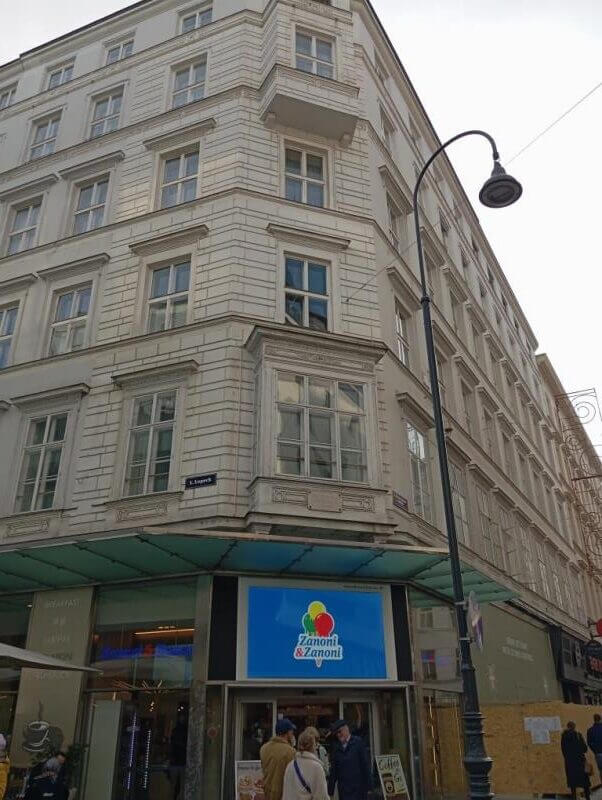
On Saturday morning, a tour of the Association’s mission was given by Maria Bara, wife of Thede Kahl. We walked through the parts of Vienna where the first Vlach merchants from Moschopolis settled around 1600. We visited the church of the Holy Trinity, built with Sina’s money, the Greek Cafeteria, which was the meeting place not only for merchants from the then Ottoman Balkans but also for Rigas and his companions. We admired the buildings of the Sina family from Moschopolis, which became a banking and financial giant that acted as guarantor to avoid the bankruptcy of Austria-Hungary and whose members earned the title of baron. The mansion of Doumbas, a Vlach from Vlasti (Blatsi), where two families with the same name still live. We admired the renovated building of the family of Herbert Von Karajan with ancestral Vlach origins from Kozani, and many more.
The participation of the Vlach Association in the Conference was beneficial in many ways: Vlach songs and dances that are part of the Greek multicultural wealth were presented to an audience of scientists. Most importantly: expert scientists found that in Greece, in recent decades, significant steps have been taken in terms of respect for Lesser Spoken Languages despite the claims to the contrary. And of course, more needs to be done, and first of all, the Charter of Lesser Spoken Languages in the European Union should be submitted for approval to the Greek Parliament, as all European parliaments have done.
In closing, I would like to point out a standard tactic that is followed in Greece. Nationalist circles, every time there is an action for the language, history and culture of the Vlachs, come out of their burrows and with fearfully ahistorical, false and unfounded publications misinform in their attempt to undermine similar actions, to threaten, to sow confusion. In the past, there was the nationalist newspaper ”Stochos”, followed by many others and the latest newspaper in Athens with the misleading title ”Democracy”, but of known views, wrote unsigned, before it even began, about a “Strange Congress in Vienna”. Some, a few small-minded people, as usual, adopted, out of ignorance or expediency, lies as truths and reproduced them on social media. But the intelligent ones know that Greece is not in danger from the Vlach language, which is a wealth for our country. And as someone aptly wrote, ” The louder nationalism shouts GREECE, the more easily it surrenders Greece…Patriotism is light: nationalism is a shadow that imitates the light, until it extinguishes it” .
LINKS
- George Sina: https://en.wikipedia.org/wiki/Georgios_Sinas
- Simon Sina: https://en.wikipedia.org/wiki/Simon_Sinas
- Nicholas Dumba: https://en.wikipedia.org/wiki/Nikolaus_Dumba
- Constantine Dumba: https://en.wikipedia.org/wiki/Konstantin_Dumba
- Riga Feraiou: https://en.wikipedia.org/wiki/Rigas_Feraios
- Poulios brothers: https://en.wikipedia.org/wiki/Markides_Pouliou_brothers
- Pericles Papahagi: https://en.wikipedia.org/wiki/Pericle_Papahagi
- Herbert von Karajan: https://en.wikipedia.org/wiki/Herbert_von_Karajan
- Karamanlides: https://en.wikipedia.org/wiki/Karamanlides
- Pontic: https://en.wikipedia.org/wiki/Pontic_Greek
Responses